
城之源
월미도 디스코팡팡서 “신발 신다가” 추락…경찰, DJ·시설 책임자 조사_我的网站

A | 기사 내용을 바탕으로 AI를 통해 제작된 일러스트. 경기일보 AI 뉴스 이미지 인천 제물포구 북성동 월미도 놀이공원에서 ‘디스코팡팡’을 타던 30대 이용객이 놀이기구 밖으로 떨어져 다친 사고(경기일보 24일자 인터넷판 보도)와 관련, 경찰이 안전관리상 과실이 있었는지 확인하기 위한 조사에 착수했다. 26일 인천 제물포경찰서에 따르면 월미도 디스코팡팡 이용객 추락 사고와 관련해 업무상 과실치상 혐의 적용 여부를 검토하기 위한 입건 전 조사를 시작했다. 앞서 23일 오후 9시23분께 인천 제물포구 북성동 놀이공원에서 디스코팡팡을 타고 있던 30대 A씨가 운행 도중 몸이 뒤로 넘어가면서 난간 밖으로 떨어졌다. A씨는 머리와 목 부위에 통증을 호소해 119구급대에 의해 병원으로 옮겨져 치료를 받았고, 생명에는 지장이 없는 것으로 전해졌다. A씨는 경찰 조사에서 “신발 한쪽이 벗겨져 다시 신으려고 한쪽 팔을 풀었는데 순간적으로 몸이 뒤로 넘어갔다”고 진술했다. 경찰은 놀이기구 운행 과정에서 안전수칙이 제대로 지켜졌는지와 사고 당시 운행 강도 및 조작 방식 등에 문제가 없었는지 등을 확인할 방침이다. 또 A씨를 상대로 정확한 사고 경위를 조사한 뒤 당시 놀이기구를 조작한 DJ와 시설 책임자 등을 상대로 업무상 과실 여부를 살펴볼 예정이다. 경찰 관계자는 “놀이기구 특성상 원심력과 반동으로 이용객이 난간 너머로 떨어진 것으로 보고 있다”며 “사고 당시 운행 모습이 담긴 영상을 확보해 정확한 경위를 조사할 예정”이라고 말했다. ● 관련기사: 인천 월미도 놀이공원서 디스코팡팡 타던 30대 바깥으로 튕겨 나가 https://kyeonggi.com/article/20260824580479。
Ecological restoration
For over 30 years, Wensuyalatu, a member of the leadership group of the Urad Rear Banner forestry and grassland bureau, has made the Gobi Desert his workplace, dedicating his life to combating desertification, advancing ecological restoration through technological innovation, and helping local herders increase their incomes, according to the local bureau's official WeChat account.
Located on the edge of the desert in Bayannur's Urad Rear Banner, it is a key area in China's Three-North Shelterbelt Forest Program, a major ecological project aimed at strengthening the country's northern ecological security barrier.
However, early afforestation efforts in the desert were far from easy at the start.
The project covers 103,800 mu (about 6,920 hectares), including comprehensive treatment of 24,500 mu of desertified land, ecological restoration of 4,100 mu of non-desertified land, and 75,200 mu of enclosed grassland restoration. The project also includes the construction of 11 small-scale water conservation facilities, all of which required strict standards and extensive coordination.
The project also includes the construction of 11 small-scale water conservation facilities, all of which required strict standards and extensive coordination.
In 1991, Wensuyalatu, then in his early 20s, chose to devote himself to forestry and grassland conservation in the Urad Rear Banner. Since then, he has remained on the front lines of desertification control, witnessing the region's harshest environmental challenges and working to find solutions adapted to the fragile desert ecosystem.
In the early years, afforestation in the Gobi Desert was an extremely difficult task. The most critical planting season in spring often coincided with the strongest sandstorms of the year. Every year during the key afforestation period, Wensuyalatu would stay deep in the desert, guiding workers on planting techniques and management practices, while carefully overseeing every detail of the ecological restoration projects.
"Every spring, the wind and blown sand were so strong that it was hard to keep your eyes open. The sand hit your face like needles. During the day, we followed workers to dig holes and plant trees, and at night we stayed in temporary shelters to organize data and review the day's work. That was the normal routine for desertification fighters," Wensuyalatu recalled.
The road to restoring the desert was far from easy. Years of drought, low survival rates of seedlings, and skepticism from some local residents created major obstacles.
"At the beginning, it was really difficult. The climate was extremely dry, and many seedlings died after being planted. Some herders did not understand or support the work. They believed deserts were naturally barren and that no amount of effort could make trees grow there," Wensuyalatu said.
To change these perceptions, Wensuyalatu brought local residents to see firsthand the damage caused by desert expansion. Through visible results and long-term communication, he gradually won the understanding and support of the community.
Facing the ecological challenges of the Urad Rear Banner, Wensuyalatu began exploring new approaches beyond traditional restoration methods.
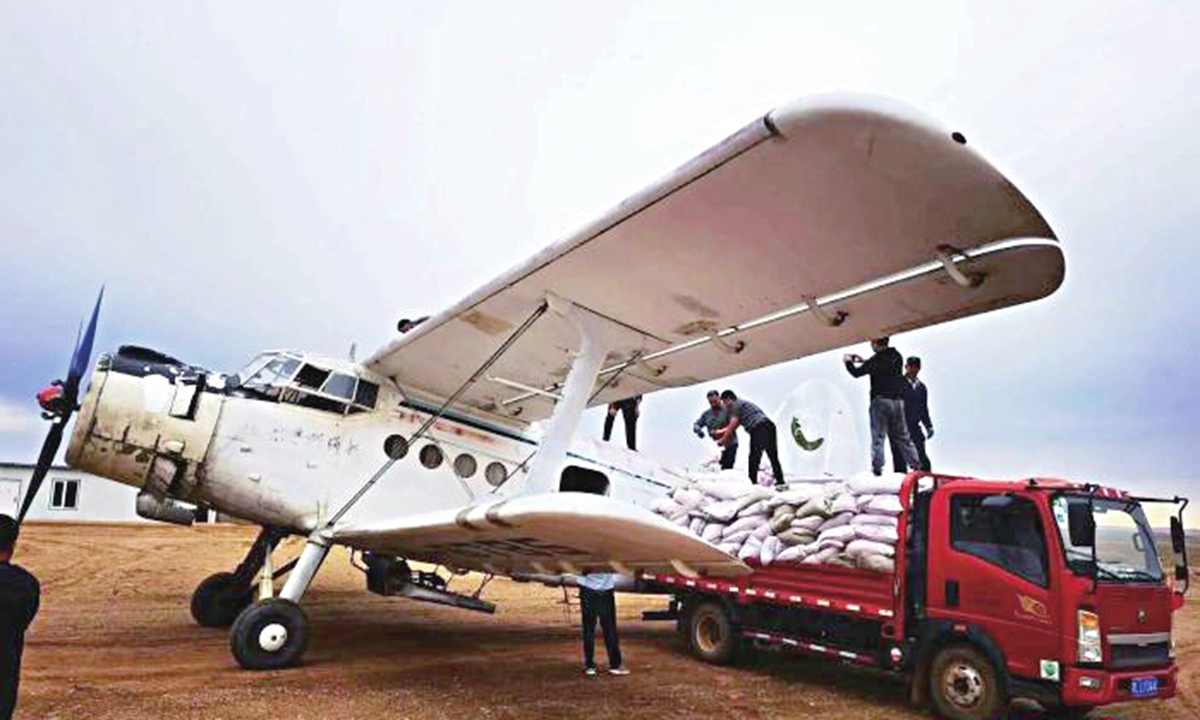
Since 2004, he has led efforts to tackle desert restoration challenges by introducing large-scale aerial seeding projects, creating a breakthrough approach for restoring degraded desert ecosystems in the region.
"Compared with traditional methods, aerial seeding is more efficient and can cover wider areas. Based on local climate and soil conditions, we select suitable desert plant seeds and precisely control the seeding height, density and timing to improve survival rates as much as possible and accelerate desert recovery," Wensuyalatu explained.
After years of effort, the aerial seeding projects under Wensuyalatu's leadership have restored more than 800,000 mu of desert land, with an effective restoration rate of 62.2 percent.
He also developed an integrated management approach combining "protection, management, retreat, restoration and publicity," establishing a mixed vegetation system of trees, shrubs and grass to curb desert expansion and reduce sandstorms at their source.
Beyond restoring greenery, Wensuyalatu has also focused on strengthening scientific research and protecting native desert species.
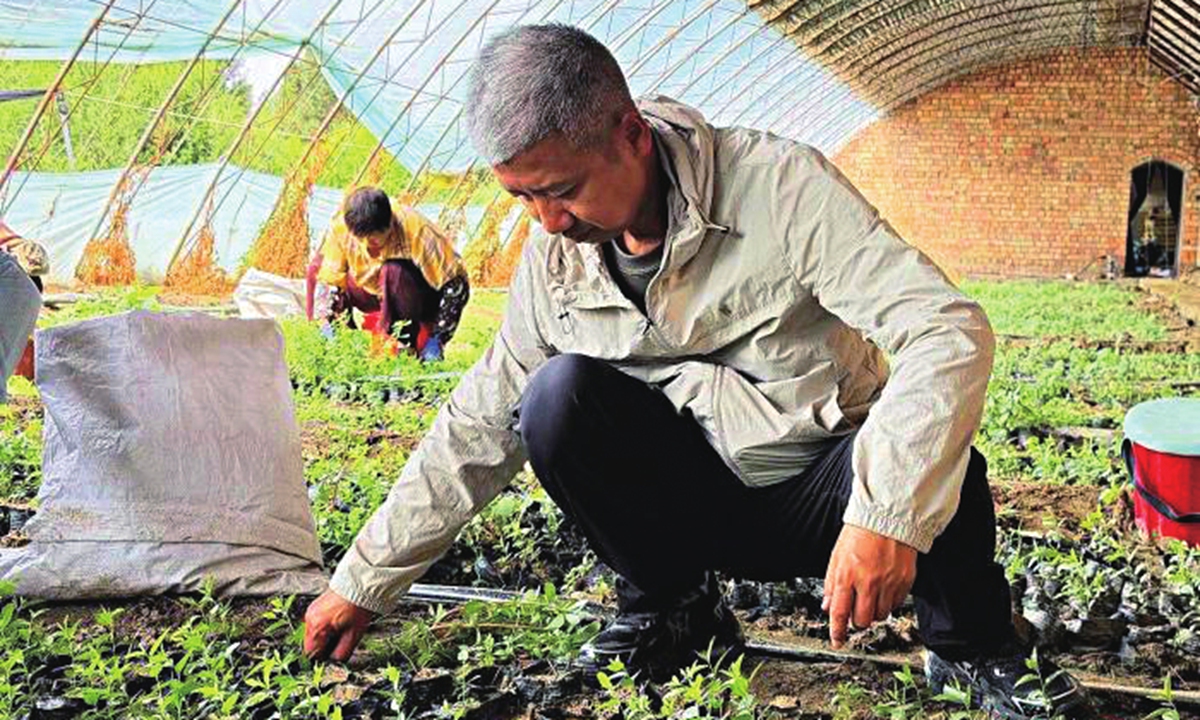
Starting in 2010, he devoted himself to the artificial cultivation of endangered native desert plants. After more than a decade of repeated experiments, he successfully developed cultivation techniques for rare species such as the endangered evergreen broadleaf shrub Ammopiptanthus mongolicus, Mongolian almond and drought-resistant elm.
Under his leadership, his team cultivated 6.5 million seedlings and completed more than 4,000 mu of high-quality afforestation projects, with seedling survival rates consistently exceeding 80 percent.
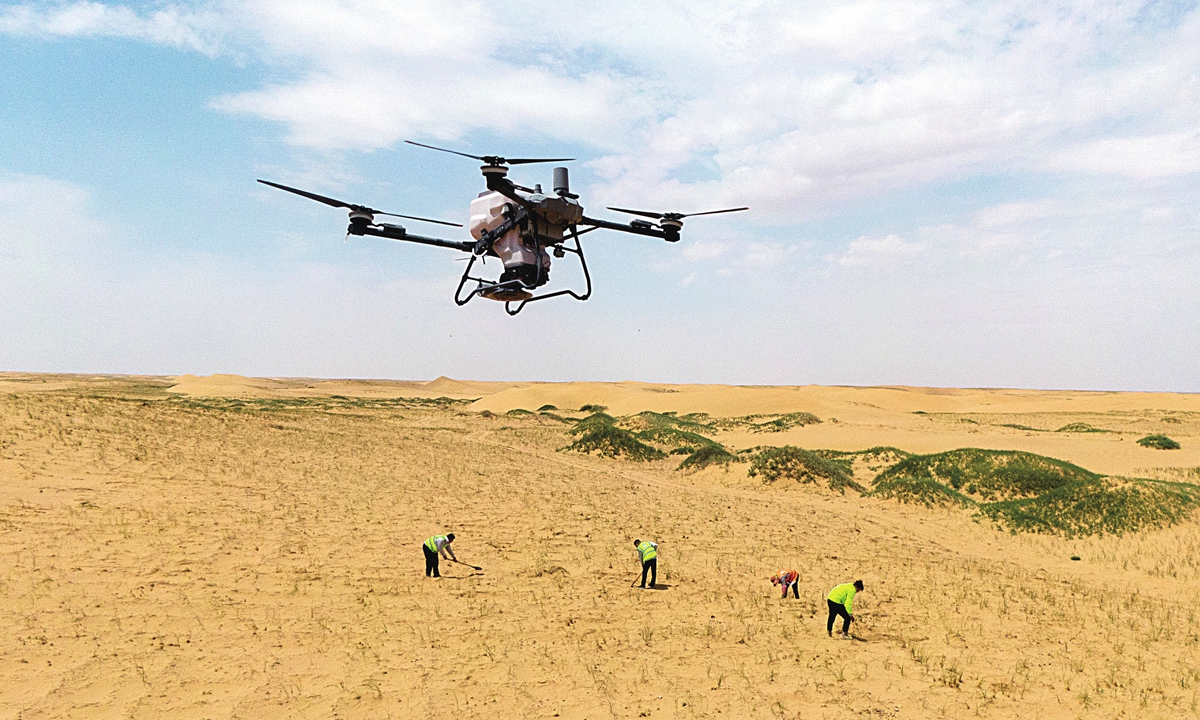
For Wensuyalatu, desert restoration is not only about creating ecological benefits, but also about improving people's livelihoods.
He has long promoted the idea that "trees should bring both ecological value and economic value." By leveraging local desert resources, he helped establish a 10,000-mu industrial base for desert plants and cistanche - a medicinal plant often grown in desert environments - across four key local villages, integrating ecological restoration with specialty desert industries.
"In the past, people thought desertification control was simply about planting trees - it took a lot of efforts but brought little income. Now things are different. By planting trees and developing industries such as cistanche cultivation, desert land can generate real wealth," a local herder said.
To ensure that local communities benefit from ecological development, Wensuyalatu introduced enterprises, supported family forest farms and professional cooperatives, and promoted large-scale, market-oriented operations.
The once barren desert has gradually become a "green treasure chest" for local herders, achieving a win-win outcome: greener landscapes, improved ecosystems, stronger businesses and higher incomes.
"Desertification control is not just an ecological project, but also a project that benefits people," Wensuyalatu said.
"Only when communities gain real benefits from protecting nature will they actively participate in ecological conservation. That is the key to making restoration efforts sustainable and achieving the vision that lucid waters and lush mountains are invaluable assets," Wensuyalatu said.
Global Times
。
Current article:http://qzzf8t.tandianxiuzhutiaoshoudiamei.pics/list_seqa/clm8lkc.html
Published on:00:33:26
下一篇:Hunter Biden judge agrees to drop old gun count after indictment replaces scuttled plea deal
 兴城市大力支持校服及工装产业发展
 碧桂园服务半年报:利润止跌向好,经营提效与PARA落地形成双重支撑
 《天堂》开发商二次元新作!《阿索拉:星之祈愿》开启测试玩家招募
 Nanjing Massacre memorial hall receives new evidence of Japanese invasion on 81st anniversary of Japan’s surrender
 韦东奕下架练习册 卖书四天销售额超100万
 《GTA6》实机惨遭大规模泄露,官方紧急删帖!
- ·国家体育总局体育基金管理中心副主任罗建彬被查
- ·聚焦五大重点领域!福建出台方案服务青年发展
- ·伊朗与阿曼筹备霍尔木兹海峡协议,美国暂缓实施次级制裁
- ·省妇联100万元惠及绥中受灾困难妇女家庭
- ·大连西岗区:一管5混1核酸初筛异常 涉及5人单采复核结果均为阴性
- ·官方:狼队边卫霍福尔转会布拉格斯巴达,球员曾效力于利物浦
- ·观赛福利倒计时!“顺心顺意 即刻精彩”活动为观赛添彩
- ·베일 벗은 산업용 차등요금제, 남부권에 1㎾h당 최대 18원 인하
- ·美媒预测勇士新赛季阵容:库追携手伦德博格首发
- ·车厘子便宜了!广西车厘子大量上市,部分卖到15元一斤
- ·报道称朝鲜发射10余枚弹道导弹 外交部:没有新的评论
- ·枣庄市人大社会建设委员会原主任委员,市委党校原一级调研员杨峥嵘被“双开”
- ·2026精选:河北省售检票系统服务商怎么选?实力解析与推荐
- ·泉州口岸首个进境水果指定监管场地获批
- ·微软Edge移动团队招聘软件工程师:中国北京办公区
- ·络捷斯特(834832):公司拟转让西安北慧信息科技有限公司100%的股权
- ·黄山栾开花 银杏果变黄 一起寻找秋天的信号吧
- ·既当国会议员又当地区议员,他拿两份薪水,总理表示“不接受”,结果……
- ·Chevron to buy Hess for $53 billion as the biggest US oil companies get even bigger
- ·俄太平洋舰队在日本海等水域进行反潜演习,图-142反潜巡逻机搜索模拟的敌方潜艇,并对其进行打击
- ·小柴购超市售卖洪水泡过的饮料
- ·四川电信邀请大众高清电话
- ·代码显示苹果 HomeHub 智能家居中枢设备支持识别用户面容,以便实现自动切换不同账号
- ·纵横谈|让生态环境法典更好守护生活日常
- ·河北五超·微视频|看台上的手势 藏着球迷的城市情怀与赛场信仰
- ·2026胡润中国品牌榜:苹果、茅台、抖音/微信前三 华为杀入前十
- ·国旗下的故事 | 预防诺如病毒 呵护健康成长
- ·超多均订过万网文遭斩杀!网友大呼这是好事啊
- ·《巫师4》官宣定档2028!《巫师3》DLC“旧时曲”即将亮相科隆
- ·抵制所有比赛!欧足联“硬刚”国际足联
- ·三名新加坡男子洗钱被捕
- ·针对无堂食外卖监管难等问题 浙江推出外卖聚集区管理模式